The current crisis, the division among the people, the protests, the lack of trust , the anger, and the anxiety are symptoms of deep, untreated disease that is moving through our country in an intergenerational, unconscious transition. These are deep problems that some people address and bring to light, but they remain active; we can understand them and think of real solutions, healing, and development that will lead to dialogue. Dialogue, not revolutionary and imaginary solutions that only deepen the rift
The article will attempt to describe the situation that has been created in Israel by examining the cultural complexes passed down from generation to generation, which our complex people suffer from, beginning with the ancient period, the biblical period, and later the exile, the traumatic return to the Land of Israel, and, of course, the cultural complexes that have been created since the hasty establishment of the state, the Holocaust, religion and state, the danger to existence at the beginning, the occupation, hubris, and control over another people. In this article, we will try to show the hidden parts of these complexes projected onto others, an unconscious mutual projection passed down from father to son, influencing and generating unrest and anger in all sectors
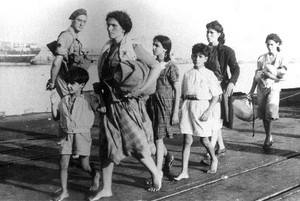
All of us, our parents, or our parents' parents arrived in Israel not easily, sometimes after travels and wanderings, sometimes to escape, sometimes with the joy and excitement of immigration, but no matter where we or others came from, it was always a state of immigration, of refugees, and of the need for a difficult process of assimilation and adaptation. Often, for some immigrants, it was a difficult adjustment and a trauma for all intents and purposes.
Our grandparents and we established a state of our own. We built it, conquered its wilderness, fought for it with blood, sweat, and tears. In this enormous and wonderful building process for us, we also harmed others, dispossessed people from their land, took over places and populations, and unknowingly harmed ourselves and our values
And yet, alongside all the mistakes and injustices that have been made, it is a built, functioning land; it has become a nation among nations, a place and a home for the Jews. Sometimes belonging to it arouses pride in us; sometimes it creates shame; sometimes we feel like a light to the nations; and sometimes it is darkness to ourselves. But let's remember, even the cynics among us, that this country also has much good, beauty, and, especially, what is dear to all of us
And alongside all that has been described, if we delve a little deeper, it seems that later on, the state, which was built from the complex melting pot of cultures and beliefs, matured, strengthened, lived, and breathed, but out of the problems of its existence- the enemies, the conquests, the shaping of society's identity, the war of cultures, and the search for a way- serious problems were also exposed
As time passed, a series of conflicts emerged from the shaky social foundation that had been built. Although the foundation was built through faith, hope, a wish for revival, and a sense of homecoming, it was unknowingly hasty, built on survival, trauma, the flames of the times, and often sewn-up patches of impermanence, with big mistakes. Over the years, the state occupied the territories, and the delicate balance it had lived in, supported by common ideals, began to collapse
What our eyes see today, to our astonishment and what we cannot help but see, is that the very society on which the Jewish and non-Jewish populations in the country are built has become entangled and "dirty," and has been afflicted with a number of chronic diseases that were repressed but have seeped beneath the surface over time. Diseases that have never received attention, adequate diagnosis, or a clear understanding of their nature and dangers
This lack of understanding has also bred a new kind of hubris, a grandiosity that has succumbed to our origins and obscured the need to clean and heal. As a result, the problems and childhood ills of the people and the state and its inhabitants were never healed, rehabilitated, or even recognized as disabilities. We must recognize what cannot be cured and therefore recognize it, compensate for it, or deal with it
And here we find ourselves in these difficult days, divided: either on the side of protesters, angry, angry, and depressed; or on the side of those who are angry, avenging, and rejoicing in vain; or on the side of those who claim: We told you, and you did not listen; or on the side of those who insist and are overwhelmed by feelings of inferiority, or immersed in the traumas of their parents and what they inherited from them, consciously or unconsciously. Because the intergenerational transmission of complexes is extensive and often unconscious
No one is happy in this situation; no one feels that anything good is happening: the anxiety, anger, pain, and sense of loss overwhelm everyone, even those who are sure of their righteousness
How do you cure such a serious condition? Childhood illnesses, as well as the polarization that had always existed, were blurred during a few days of war, but the situation was greatly worsened and erupted into the supposedly new situation that was created
And the question is how it is possible to heal a social situation when there is no agreement that there is something to heal, when some think the solution lies in a coup d'état and others are kicked out of a revolution, a situation that has created a kind of war between us, a situation that is, in fact, the dirt that hides the deep wound
To understand the complicated situation, one must first clean the wound: clean up the wars for justice, the entrenchment, the arrogance, the inflammatory voices, the ego, the childish wrestling, and the blurred machismo.
Two main objects have emerged as major sources of dirt today and must be cleaned to heal the wound, as they currently attract the consequences of the underlying conflict and fragmentation
The first object is the prime minister accused of criminal offenses, who has become a double symbol: on the one hand, inviting an enormous projection of a part of the people onto him as the Messiah, who is sure that he is the victim of a system of hubris and elitist arrogance, a projection that also contains the secular messiah, a cultural complex in which one part of this nation is possessed. On the other hand, it invites the projection of another part of the people, because this is the evil criminal and perhaps a false messiah, who comes to steal the country for himself and his people, as it were, at the expense of others
When something like this becomes a symbol, a hook, a point of attachment, the truth is of no real importance, nor is what he himself does, even if he has an interest in the split, perhaps grew out of it, and even inflamed it, but we will not deal with it here
What matters is that the symbol itself is a source of repercussions and polarization, however paradoxical that may be. To those who support him, he is a kind of genius leader, a messiah who came to save them; to those who oppose him, he is a scapegoat of the system, a serial criminal who aspires to be a dictator. This divides the consequences, but it also invites and intensifies them, to the point of idealization on one hand and demonization on the other
The objective situation, the symptom that has been created, is severe, but it is not the danger of the disease; the enormous idealized or demonic consequences that increase the division among the people do not allow any discourse and give an opening to expressions of anger, distorting the sense of justice on each side, for which it is determined to fight and even to kill and sacrifice everything
A second consequence is revolution or judicial reform. Because of the speed, the unrelenting determination, the lack of trust and dialogue, and the complete loss of a sense of togetherness that is so fundamental, the revolution or reform that is perhaps in part necessary has become an object of a savage, split projection of rage, anxiety, and inferiority. To the one who inspires despair and primordial fears, or, on the other hand, to the one who inspires change, a fundamental compensator for revolution and change
On the one hand, people feel a sense of abduction, a takeover of all authority, loss, and an immediate need to fight. On the other hand, there is a sense of urgent, one-time need to put things in order, to take matters into their own hands, and to eliminate once and for all feelings of injustice, Mizrahi left and right, Mizrahi and Ashkenazi Arabs and Jews. Deformities and diseases are certainly not the right way to cure them
These implications for the prime minister and the reform, although divisive, are dirt, because they draw an outpouring of fears, rage, and unresolved complexes on all sides, intensifying and blurring the illnesses of childhood; the unresolved complexes, filled with feelings of pain, anger at injustice or arrogance, become sacred and sanctify each side in its own way
Beyond cleansing what I call the dirt, the symptom of the consequences and the entanglement that exist now, we must relate to the pain of the disease. The disease itself, or the ailments because they have not been treated, have created cumulative and chronic pain; people are really in pain. Although pain also needs to be addressed, it must be understood as a difficult feeling that accompanies the disease but is not its heart. Annie also argues that the public should be given painkillers, but that the disease itself should be identified beyond the dirt and ego, and the appropriate medication should be found for it
To understand the disease, we must all identify, as much as possible, each and every group, the personal and socio-cultural wounds we carry from the society in which we grew up, especially from our parents' home, from our parents' childhood cradle, and what they passed on to us, often unconsciously. And, no less important, we must understand the chronic diseases our country suffers from, our people, even in their lives in current generations since the establishment of the state, even in exile, and where we all came from. And even in its historical life, it is the ancient myth from which our culture draws. A myth that is both good and bad, and that creates hidden complexes in ongoing situations
As a psychologist who believes in an archetypal approach, I hold that in the psyche of all of us there is a general archetypal layer, and that the social and cultural complexes created on top of the archetypes, i.e., the complexes our culture or multiplicity of cultures create, are unique to us. I would like to relate this to some central principles that are focal points in Jewish-Israeli culture. And then I will try to raise possibilities of what can be cured in such a situation.
I would also like to suggest that everyone develops a willingness to observe, on a personal and cultural level, himself, his girlfriend, and his family. Let him observe, instead of throwing away, where he comes from and how it affects his worldview; especially what irritates, angers, or frightens him, or, alternatively, what arouses his cheerfulness or joy. It is also worthwhile to examine the tendency and complexity of seeking a messiah, even a secular one, or, alternatively, of immediately rejecting those who smell of messianism
An archetypal understanding and the cultural complexes that arise within and accompany Israeli-Jewish society
We will begin with the archetypal understanding and the complexes that may arise from it, starting with the fact that each nation has its own culture and the myth of the transcendent, super-logical transition on which that culture developed. In a myth unique to a people or culture, we will see what drives and advances its culture, what its special values are, what its value codes are, how the people developed, what its weaknesses and strengths were, and what negative qualities are hidden from its eyes
In other words, in the myth of the people, we will see how the exemplary stories of the heroes are perceived and developed, what they transmit from generation to generation, and how morality and special values, along with logical and emotional beliefs, are created, always alongside the overt or hidden evil that that culture must contend with. What matters most is what the collective soul of the people and culture transmits as good and evil.
Understanding the nature of evil depends on what the shadow is—the hidden, unique part of the culture that its bearers belong to. It is what will be repressed, concealed, and perceived as qualities to be ashamed of, denied, and hidden. Shaming, concealing, and repressing undesirable traits and impulses, and not recognizing them, do not solve them or help govern them. Instead, we unknowingly project them onto others, an internal or external enemy, and thus get rid of them. Projection is problematic because it creates new problems for those onto whom we project. The implication complicates and obscures the real problem. Therefore, we must recognize its existence and be aware of its impact
Especially for us Israeli Jews, as we return to our land, the ancient homeland of Zion, the chosen land promised to us by our Father in Heaven, a promise we alone believe in, we should recognize the unique shadow that creates this wonderful uniqueness
The Chosen People
The people chosen for the Chosen Land are marked by a kind of psycho-cultural complexity that makes us special, privileged, and promised by Heaven. In the message unique to us, we will also find strength, determination, faith, and the drive to act and fulfill it, and this is, to a certain extent, its positive side. But we must remember that from that faith, justification for negative things may also arise, and the shadow of self-righteousness, domination, cruelty, resentment, injustice toward others, and other evil deeds may also develop
Similarly, the hidden wish for a messianic leader to bring redemption, a solution, and the end of days can also emerge.
Psychology makes a distinction between personal or cultural complexes that help a person or society function, drive action for one's people, foster creativity, and support a life of fulfillment, and those that become unconscious, whether personal or cultural, and can complicate and even endanger, especially when one is unaware of them and projects them onto others
These are complexes that, even on a personal level, a person would prefer to hide, repress, and not know about. On the level of the people or culture, these same complexes can take over and act whenever they want, without a clear trigger and without the person's control. They are repressed personal or cultural complexes that live in the shadows, in the hidden part, and are therefore projected onto others. Projection is functional because it can supposedly be released, but only until the person is taken over in sensitive, unpredictable situations. Both the consequences for others and the danger of those complexes taking over are good reasons to know them
Again, "You have chosen us" is one of those cultural complexities of this people that on the one hand were central to its faith and formation and could have given impetus and strength to action, fulfillment and preservation over generations, but on the other hand it can sometimes create in society or in one person: hidden complexes of justification, arrogance, even racism, an inflationary sense of self, of messianism, or we are better than others, both towards others and between ourselves, can develop as a kind of self-righteous feeling, who holds the "God" better, the good values from the chosen mouth
Sibling Jealousy
"To develop the sin of murder," the evil that develops in the Torah because of sibling jealousy leads to murder. This evil is also primitive and mythological, as seen in the ancient story of Cain and Abel. In contrast to the mythologies of other peoples, in which evil stems from the primordial rage of Mother Earth and the monsters she created, and from the struggle between patriarchy and matriarchy or from cruel conflicts between fathers and sons, in the Torah evil is often created by God's preference for one right and successful brother to continue the line, as opposed to the other who does not have what it takes
God prefers the absurd offering to that of the jealous, unloved, inferior Cain, who murders his brothers; this symbolizes the undesirable person, who is always in danger of sin, jealousy, the shadow, the holy "ego," and his evil parts
Even as Sarah struggles for Yitzchak, Avraham creates a profound preference for Yitzchak over Yishmael. Yishmael, the inferior brother who interferes with the course of history, is expelled with his mother, who lives with God's consent. Yishmael's expulsion still creates a deep complex for both peoples, Jews and Arabs, who see it as a source of division
Later on, Yaakov and Esau become brothers, shadows of each other: Esau is cast with the unappreciated evil elements, and Yaakov carries the good ones: two brothers, the bad and the good, but this is a problem that Yaakov and Israel, including future generations, will have to deal with for the rest of their lives
In Yaakov's life, we again see his preference for Yosef over his brothers, a preference that arouses jealousy, revenge, and cruelty among the brothers, who become evil. Later, the struggle between the brothers, the tribes, continues among the Jews to this day
Later in history, the kingdoms split after the kingdom of Solomon: Judah and Israel, and more.
Throughout history, we see the centrality of sibling jealousy, division, and the question of who is chosen and better, pushing for improvement but also fostering complexes and evil in the depths of the Jewish soul. This jealousy can easily create the roots of evil even in the current conflict here in Israel. With whom is God? Who holds the right Torah and the right values? Who is the good Jew? Who holds the land correctly? Who looks down on whom? The whole issue has become such an Israeli complex
The Matriarch – The Complex of the Non-Exempt Mother and the Inferiority of Womanhood
Jewish faith and mythology place patriarchy at the center: the father, the laws and commandments, and their transmission from the father in heaven to his son, rather than from the primordial motherhood of nature or Mother Earth. The matriarchal layer of the soul, the primordial natural layer, has been relegated to a corner and is not part of official Jewish mythology. As for the "Jewish" soul, the situation before the separate consciousness [1] has taken an inferior place. It is true that Judaism progresses through Chassidism, etc., but the unequal basis that emerged from the outset will always persist
The denial of the matriarch's power – the presumption of natural motherhood and the place of motherhood in Jewish culture, especially in the formal parts of religion and the Bible – has led to the repressed matriarch being liable to come and take over in an indirect and sometimes unconscious way
Neumann argues that the issue of the land, the homeland, the Promised Land, and the longing for Zion express the repression of the matriarchate, a repression liable to take over the people, and that the land is a substitute for Mother Earth, which becomes holy. Throughout the years of exile, the longing for the mother, the land of Israel, and Jerusalem was burned. This yearning has also created a complication that could create a cultural complex around the land, brutal wars, and control of conquered others
This tendency and complex also create significant differences within society, both among the Jewish people and within Jewish-Arab society. Differences stem from approaches to the land and the occupation, creating further divisions within the people. The split is between those who believe in and want the redemption of the land without regard for its other inhabitants or their rights, and those who approach the matter with reference to others, human rights, and firm opposition to the occupation, a subject we will discuss again later
Inferior femininity
Beyond the repression of the matriarchate, we will also mention another code that can trigger a complex of central Jewish patriarchal rule. A code that says that, starting with the voice of the Creator God, the God revealed to Abraham and Moses, the patriarchal voice is dominant and central. Central here is the voice of the patriarchs, as well as the voice that punishes after the sin of the Garden of Eden in concrete terms: "your husband has your desire, and he will rule over you." There is danger, and a cultural complex may arise of the exclusion of women, domination, seeing women as the source of sin, etc. A complex that stemmed from a need that was perhaps understandable at the time, to strengthen patriarchy versus motherhood, to give a central place to the voice of God, which became a patriarchal male voice, but later unconsciously created a complex of lowering the feminine element, taking control of it and causing it to descend over generations
The mitzvot between man and God are more important than man to his friend
Another hidden evil may stem from something ostensibly good and central to the Jewish faith. The same psychological complexity is central to the Jewish soul: the connection to God and the observance of His commandments. Obedience and the observance of the commandments. The issue is how much you keep the commandments and how central their observance is. At the same time, this may create justification and condescension and provide a pretext for cruel and unacceptable acts toward others. All of this, even though the commandments between man and his fellow man are also important, may easily be dwarfed by the main commandments toward God. In other words, despite the mitzvot between man and his fellow, injustices may develop that are pushed out of justification and directly into man's hidden shadow
As for the shadow, the obvious question is to what extent the repression and transfer of complexes beneath the surface serve morality and help a person; that is, repression can be part of overcoming, even elevation. But this is a situation that we will call in Neumann's language, the old morality that preached overcoming through repression, concealment, and lack of exposure or unconsciousness in the shadow
This contrasts with standing before the shadow, which leads to recognition and awareness of evil. This approach leads to direct confrontation with the shadow, both personal and cultural, even alongside the observance of the mitzvot. According to Neumann, this recognition and awareness of evil, which can arise and may be repressed, creates a new consciousness within the framework of the new morality. 3]
Again, a person may observe the commandments of God and feel good, so much so that observing the commandments may sometimes justify harsh deeds toward others, even threats, because of that religious affiliation and/or the observance of the mitzvot. I have already heard many voices: "My reckoning is with God, not with people! I will hand over my judgments there and not to any court of ordinary people." This may also polarize people over which court is right, what the right morality is, and who the real judges are
People of the Book and learning as a highest value
The clear preference for studying the books and the Torah was evident from the outset in the messages and cultural codes. A message that promoted the people and their Torah! But this preference also created shadow complexes
From Abel versus Kayin, Yaakov versus Esau, and Yitzchak versus Yishmael, we see a preference for those who study, the people of the Book, over those who delve and do so in accordance with God's commandments, and perhaps more connected to God and preferred by Him. Such a preference, which we have already discussed, can lead a person to think he also has special merit on all sorts of levels, including a life supported by others who work for a living and serve him in inferior work
This is once again a mental chariot that, on one side, pushed for learning, helping people maintain their uniqueness for many generations, but at the same time created a complex that could develop justifications for reliance and dependence, traits that are pushed into the shadow of a person, as well as laziness, lack of coping, and even parasitism, an inability to stand alone. Cultural preferences can create problematic reactions in others within the same society, such as jealousy, a sense of exploitation and deprivation, injustice, and inferiority, vis-à-vis learners and those who are supported
The spiritual, God's representative on earth – the danger of false self-secular messianism and a descent into the archetype of the Great Mother and the primordial impulses
The prophets are among the most fascinating biblical figures. They possess a special ability to encounter and connect with the unconscious, strong intuition, and the capacity to imagine, prophesy, and recognize the people's situation vis-à-vis God. In a positive sense, the prophet figure inspires the creation of central spiritual leaders in the nation's life. These figures guided kings and leaders in moral observance and other areas. They also inspired various leaders later in the people's history
Even today, we see figures who accept these consequences and become influential as God's representatives in the Jewish world. But the negative complex that may arise from such a prophetic model, hiding in the shadows, gives too much power and importance to a leader who uses these powers for power, money, influence, and even political influence. Here we may encounter a repressed guru complex: a leader with power and influence who is not necessarily positive, who mediates between man and God or his commandments, but from whom a shadow of power, influence, false deception, and exploitation may emerge. The disguise here is enormous, and giving power to intellectuals entails danger, especially if we are not aware of the shadow that develops behind the scenes
Be fruitful and multiply and fill the land
One characteristic of male behavior in nature is to spread his sperm as widely as possible to preserve the breed. As the male emerged from the matriarchal period of nature and moved into the patriarchal period, as in the formation of the Jewish people, the dissemination of the seed took on an additional and higher meaning: the aspiration to transmit my teachings, my values and morals, and, in the Jewish case, the dissemination of the revelation of God, His Word and His commandments, to the central and continuous
Part of the multiplication of the land stems from the desire and aspiration to spread and preserve the people, with them the Torah. At the core of the Jewish people is the psychological complexity of the aspiration to spread and preserve the people and the Torah, which also stems from life situations; here we find ourselves most affected and even commanded to increase the number of births. The increase in births and the perception that this is the mitzvah have created a central urgency in the Jewish people for children and as many children as possible
Of course, in the years of exile, pogroms, and persecution, this approach was understandable and justified; but today, in a modern, liberal country like ours, this mitzvah has created a significant divide between the religious populations that observe the mitzvot and the secular liberal ones
The cultural complex that may underlie this issue is a war of cultures over the granting of bonuses to families with many children, marked by resentment and even fear among the secular population. Resentment, anger, and fear, along with the sense that the observant are incomprehensible or unacceptable, have once again brought long-repressed complexes to the surface
Beyond the codes, the Jewish people developed cultural complexes later in their history
Antisemitism and the Holocaust
Additional psychological complexity has accumulated for this nation during its long exile. On the one hand, we mentioned the chosen and special people who surpass the Gentiles, and on the other hand, the scapegoat, the persecuted, targeted by anti-Semitism and pogroms, and later by the terrible Holocaust, which created a cultural entanglement with which he lived. But the same entanglement may also be taken as an excuse for places that are needed and those that are not needed, and the same entanglement in the wake of the Holocaust may give holy priority to the suffering of that part that suffered from the Holocaust and diminish or even illegitimize the suffering of others
The use of anti-Semitism and the terrible Holocaust can be catastrophic and can also serve as justification for various actions that are pushed into the shadows of humanity. This complex invites endless attitudes, both within us and toward the world. On the other hand, it can also create fear, anger, and accusations among those who see it from the outside and react explosively
Other complexes stemming from the Holocaust and the revival are: "This will not happen to us anymore" and, on the other hand, "We will not do to others what they did to us." These two psychological complexes accompany the building of the state, sometimes to defend ourselves and sometimes to attack. At times, those accused are labeled as pure, and at other times as fascist, depending on what and when, and on which side. It is very important to understand when and why, and especially for each person, what his shadow serves him when he is in a hurry to use it
The Sabra and the Wandering Jew – Complexes in the Land of Israel
One of the interesting cultural complexities that developed here in Israel immediately after the first immigration was the contrast between the new Sabra and the wandering, exiled, and repulsive Jew. The Sabra was like David versus Goliath, small, brave, and daring. The new Israel was looking for Israeli heroes who were not in exile, those who had been freed from the characteristics of the persecuted Jew, "like sheep to the slaughter"… The Jew who flatters a non-Jew, the Jew who lives by grace and not by merit
But the entanglement of the sabra, the one who must be brave, a hero with an upright back, detached from tradition and the long exile, the cradle of our culture, has created people who are a little detached, rough, and even condescending toward those in exile, the new immigrants, and sometimes even toward religious Jews.
The sabra complex and the shadow it cast became increasingly intense and even fostered preferences and condescension vis-à-vis Jews from the Mizrahi diaspora, or those who differed from those who became favorites here
The ingathering of the exiles in Israel also created psychological complications, with the message to forget the culture from which you came, to forget the language, and to create new creatures who belong only here. And "here" was something very specific: not the town, not Dosi, not Mizrahi, but Israeli. What an Israeli is remains unclear, but a certain myth has emerged, one that is more Western, European, and American, special, and mostly non-diaspora
The shadow cast by the new myth of the fearlessly built Israeli warrior sabra created preferences, mutual consequences, and hidden resentments, including feelings of inferiority, one-sided idealization, and low esteem for the other
All these psychological complexities were repressed, hidden, and denied; they lived in secret for a lifetime and passed freely between generations from father to son
When a mental entanglement lives in secret, in the personal shadow and on the collective level, it becomes poison, an ongoing resentment, and part of the intergenerational transition to the next generation
Let us remember that just as the same values, ideals, and desired national ethos pass through various channels, such as social education, so too do the cultural complexes in the shadow of the repressed pass unconsciously from generation to generation. The intergenerational transition of complexes does not disappear; it does not assimilate on its own. It lives there, even grows stronger, grows better, and is secretly poisonous
In summary, the various splits and their implications for others are a way to deal with repressed complexes and parts of complexes that have never been processed in the shadows
Repression does not help, nor does it overcome the need to recognize, process, make space for, listen to, and acknowledge vulnerability, preferences, inferiority, and superiority, even if these dynamics occurred in previous generations
Everything that is repressed and hidden is still alive and waiting to come out! It lives on the periphery, on the margins, like the shadow's path that does not live in the consciousness at the center
And we will add the dimension of the last decades: new, additional complexes that emerged as the country matured
Second-class citizens, racism, security, and control over other people
And alongside the divisions within us and the mutual consequences of the unresolved cultural complexes, there is a central issue that lives in our country, alive, alive, alive, and unresolved, and that is the fact that there are among us second-, third-, and fourth-class populations, populations that over time become more and more scapegoats, like woodcutters and water pumpers, since biblical times to social ills. And alongside the weaker populations that live among us, there are also populations over which we are masters
However, alongside the domination of other people and the development of racism, there is a complex that develops, justifies, and sustains itself, namely the complex of security and power, the use of force. True, we need security, and we must be strong, but these needs have also become a powerful cultural complex that creates endless justifications for being Minister of Defense. Being strong, with a strong hand, is a cultural complex that serves many purposes, but it also brings evil, cruelty, arrogance, terror, and rage that poison and divide us
Feeling strong as a Jew versus an Arab, or as an Israeli versus a Palestinian, is a situation in which social ills, racism, loss of humanity, loss of scale, and deterioration into so-called justified cruelty by casting a shadow on the enemy are possible
What do behaviors and consequences do to the human psyche and our collective psyche? They distort and, over time, corrupt
The Torah we received does not always help us in this regard, because attitudes toward neighboring nations, to Amalek, and especially toward those considered enemies, after the evil, are always difficult; it offers a moral justification for killing and destroying enemies
Humanity at All Costs – The Shadow of the Enlightened
Alongside the security and power complex lies humanity's psycho-cultural complexity: the attitude toward the other, familiar to all of us and connected to human rights and, as it were, to the A B of human relations. But even human complexity and self-evidence can create a complex of hyper-humanism, sometimes expressed as belligerent activism, which may also lead to violence and a failure to listen to others, including the others within us as part of us
A humane approach can sometimes become self-righteous and turn into aggression, a way to attack, a shadow of a humane person who fights for his principles
Of course, a humane approach that sees one but not the other can cause division. When humane approaches draw distinctions between populations, they can encourage people to project their own shadow parts onto others, thereby preventing dialogue
"I am the humanist and the human, the liberal and the progressive" and you are the "primitive, racist and fascist" is an accepted Israeli split that lives and is found beneath and sometimes above the surface
And we will end with the fragmented and fragmented cultural complexity that exists in our country in a particularly strong way today
Liberalism vs. Torah – is this really a contradiction? n
Alongside all the cultural complexes I have described, there is a central conflict that divides the Jewish people of Israel, and it must be addressed: liberalism, which, in the opinion of many, is unnecessary and even contradicts the Torah, alongside those who see the laws and commandments of the Torah as complete, and even some who see it as a contradiction to liberalism and human freedom
This fragmentation, and the contradictory view of liberalism versus religious morality, create a complex situation unique to people living in the country. Sometimes it appears at the cultural and political collective level, and sometimes as personal complexes, inevitably causing a personal clash and a major conflict between these two moral approaches
Remember that complexes and the shadow belong to every culture and every individual, and that each is responsible for knowing his personal or cultural shadow. To understand that he who represses and casts away must stand before his shadow and know it
As we mentioned, Neumann calls knowing the shadow a new morality, one in which a person stands before his shadow. Facing his personal and cultural complexes, he recognizes them and sees how others control, lead, and create him. He is willing to recognize how the most beautiful ideologies can hide his pathologies or his culture. He takes moral responsibility for both the personal complex and the collective one he acquired, was influenced by, or collaborated with
Resolving the split and recognizing the complexes requires dialogue, self-observation, openness to the other, and the cessation of consequences. It is necessary to recognize the demonization (exaggeration and demonization) that man and his culture will always make by projecting onto the other side, the enemy in front of me, even if he is part of my people.
The Slide from Democracy to Secular Messianism and Pseudo-Democracy
The less people think independently, the less they know about their own shadow; the more they are captive to the collective complexes of parents or previous generations, looking for a messiah or a total ideology, the more they will drift as a mass, making impersonal, thoughtless choices, i.e., not truly democratic!c
It is important to recognize the problematic aspects of the complexes we inherited from our ancestors, to be aware of the intercultural transitions passed down from our parents, and especially to understand the hidden aspects of the culture and country in which we live and belong. It is important to know what we project onto others, often unconsciously
It is important to get to know the part of us that emerges in moments of harm, competition, projection onto us or others, and when we identify with that projection. That moment, which reminds us of inferiority, harm, or superiority and harm to the other, is an awakening that should define the consciousness that is the tool: listening, compassion, and openness to the other. This part is not cured by compensation, revolution, or today's social change. Healing is related to the past.
Failure to recognize the mental, cultural, and personal complexities, especially those repressed within us, and a lack of recognition of the split and projection onto the other, even if there are some good reasons that create a basis for projection, may, in an instant, slide us down a slippery slope toward absolute evil
Such slippage can happen in an instant, beyond the complex and the shadow, and may turn into an evil that overwhelms us, without real awareness of what is happening to us, to ourselves, and to others. The flood of evil, of course, harms others, but it also harms the person himself, who loses the image of Enosh and must deal with it later
Our self-awareness may serve as a kind of partial immunity against the slippage into group or cultural evil and can enable a dialogue with the other in which we appear cleaner and less demonized
With self-awareness and general recognition of the complexes that exist, the recognition of projection, the intercultural transition from a previous generation, the recognition of the shadow of any mental complexity, and the recognition of the other, and with all of which we have the ability to dialogue with the other, the others within us, and those around us, is of utmost importance
March 2023
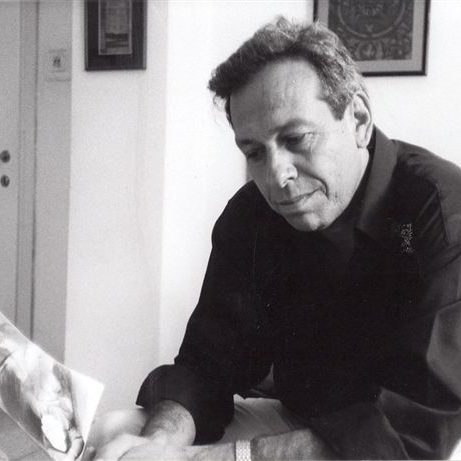
Avi Baumann
[1] In the matriarchal period in the life of the soul, this refers to the period when consciousness has not yet crystallized as something separate from the unconscious
[2] A. Bauman Adama, Mysticism and Peace Lecture at the Neumann Conference 2005
- Neumann, The Sources of Jewish Consciousness
[3] Neumann, The Psyc